Can I Do My Own Legionella Risk Assessment?
Yes — for an ordinary water system, you can. And you don't need to be an expert to start. Here's exactly what that involves.
Yes. For an ordinary hot and/or cold water system you can carry out your own Legionella risk assessment. The law requires competence, not a contractor — you need to understand where Legionella grows, which parts of your system matter, and what controls to put in place. A professional is needed for cooling towers, spa or swimming pools, and healthcare premises, and for specific tasks such as plumbing, electrical work or specialist access — not simply because a building is large.
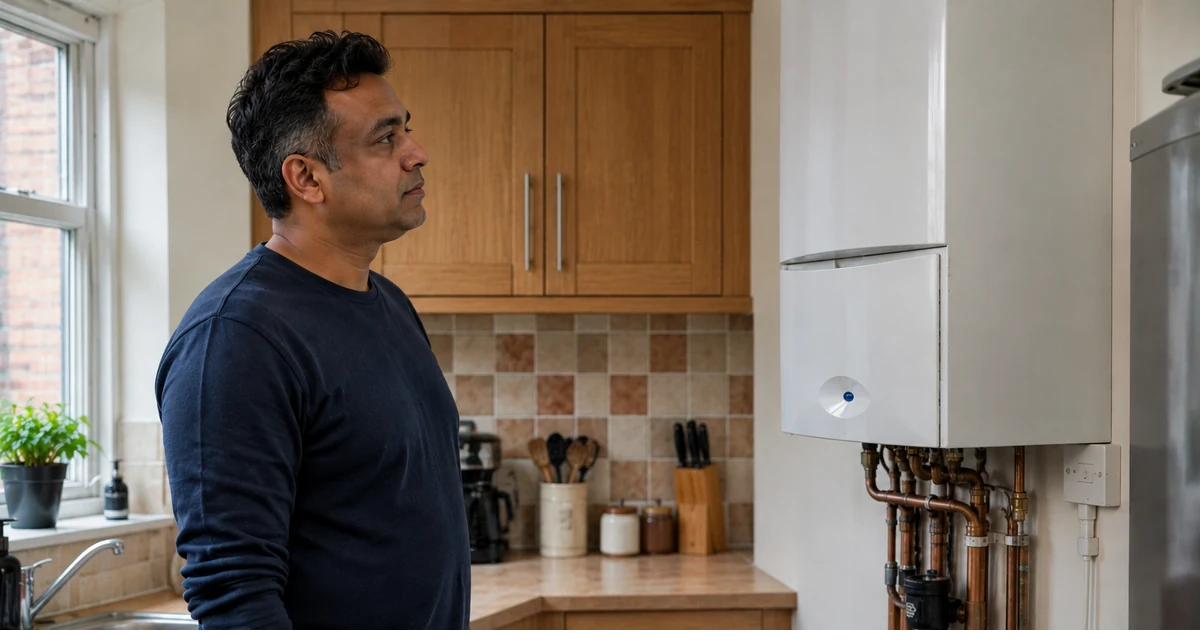
One of the most common worries we hear is: "Am I even allowed to do this myself?" The answer, for the vast majority of ordinary water systems, is a clear yes. The law doesn't say you must hire a contractor. It says the assessment must be done by someone competent — and that can absolutely be you.
"Competent" — what it actually means
This is the word that trips people up, because it sounds official. It isn't — and you don't have to guess what it means, because ACOP L8 spells it out.
What ACOP L8 actually says. Whoever carries out the risk assessment and draws up the precautions “should have such ability, experience, instruction, information, training and resources to enable them to carry out their tasks competently and safely”. And then it lists exactly what they should know:
- “potential sources of legionella bacteria and the risks they present”
- “measures to adopt, including the precautions to take to protect the people concerned, and their significance”
- “measures to take to ensure that the control measures remain effective, and their significance”
Three things. That's the whole bar. It is not a qualification, not an accreditation, and not a licence — it is knowledge, and knowledge is learnable.
ACOP L8 is equally clear about the other direction, and so are we: “Where the dutyholder does not employ anyone with the necessary competence, they may need to appoint people from outside the organisation.” If your system is beyond you, bring someone in. For an ordinary hot and/or cold water system, it very often isn't.
The key principle: the law requires competence, not a contractor. If you understand your simple water system and the steps to keep it safe, you're entitled to do the assessment yourself — and keep the money a consultant would have charged.
What a self-assessment actually involves
For an ordinary hot and/or cold water system, the assessment is a structured walk through your own building, looking at:
- Where water comes in and how it's heated — how your system takes water in and warms it.
- Where water is stored or could sit still — anywhere water is held or an outlet rarely gets used, because still, warm water is where the real risk sits.
- Temperatures — is the hot water genuinely hot and the cold genuinely cold? Legionella thrives in the lukewarm middle.
- Who uses the building — and whether anyone is more vulnerable.
- What you'll do about it — the control measures, and how you'll record them.
Done methodically, this is very achievable for an ordinary system. The difficulty isn't the physical work — it's knowing the right order, the right things to look for, and how to record it so it stands up. That structure is exactly what a good guided tool gives you.
When you genuinely should call a professional
What decides this isn't how big your building is — it's what's in it and what your assessment turns up. Some systems are simply outside a self-serve assessment: a cooling tower or evaporative condenser, a spa pool or swimming pool, or a healthcare setting. Certain hands-on jobs are too — plumbing or electrical work, or anything needing specialist access — along with anything your own risk assessment flags as beyond routine control. A good self-serve tool recognises these, sorts what you can handle from what you can't, and tells you plainly when to stop and bring someone in. Being honest about that boundary is part of doing this properly — and it applies the same whether you're assessing one flat or a large estate.
How to build your competence quickly
You don't need a two-day classroom course to assess a simple system. Understanding the basics — what Legionella is, how to take a temperature reading, how to flush an outlet — is enough to be competent for an ordinary system, and it can be picked up from clear, practical guidance. That's why EASYlegionella pairs a guided assessment with free, plain-English training: the guidance builds your competence as you go.
Build your own assessment, guided every step
EASYlegionella walks you through your own Legionella risk assessment room by room, in plain English, and flags anything that needs a professional — so you know you've done it properly.
Join the launch listThis guide is general information, not legal advice, and does not certify compliance. Your legal duty as the responsible person cannot be transferred. Always refer to HSG274 Part 2 and ACOP L8 for the authoritative guidance.